
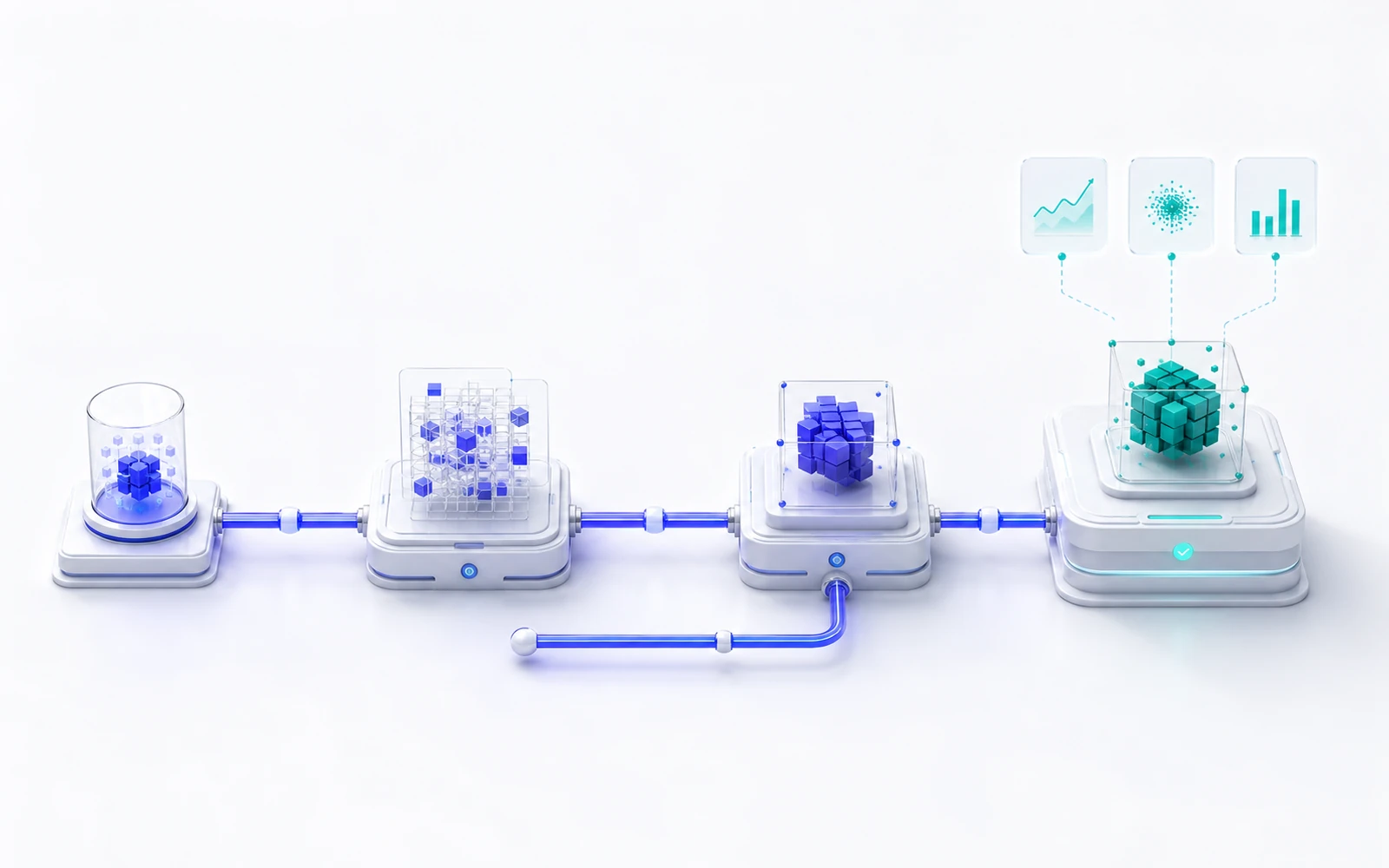
A model working in a notebook is not a production system. Production requires repeatable data flows, controlled releases, observability, security, and clear operational ownership.
Without data contracts, the model stands alone
When schema, quality, freshness, and ownership are unclear, model inputs change over time and quality degrades silently.
Source systems, feature definitions, data validation, and error quarantine must be explicit parts of the production pipeline.
Uncontrolled releases create regressions
A model, prompt, or retrieval change is not just a technical version; it changes user experience and business decisions.
Every release should pass offline evaluation, security, latency, and cost checks, then launch with canary and rollback plans.
Monitoring is more than uptime
A system can be online while producing poor answers, increasing cost, or losing user trust. Technical and product metrics must be observed together.
Quality, drift, latency, token cost, failure classes, user feedback, and business outcomes should meet in one operations view.
A system cannot operate without ownership
Teams must know who responds to incidents, which metrics trigger alerts, and when a release is rolled back.
Depending on delivery scope, production handover may include code, dashboards, runbooks, access models, and knowledge transfer.
Key takeaways
- Define data contracts before the model.
- Release every version with evaluation and rollback.
- Observe quality, cost, and business outcomes together.